
by: Charles Cruz
When I hear of stories like four-time Formula 1 World Champion Max Verstappen, who started karting as early as the age of 4 and debuted in F1 at the age of 17 without even a road license to drive in his own country, I think to myself “They don’t even have the license to drive, yet they’re made to drive to survive?”
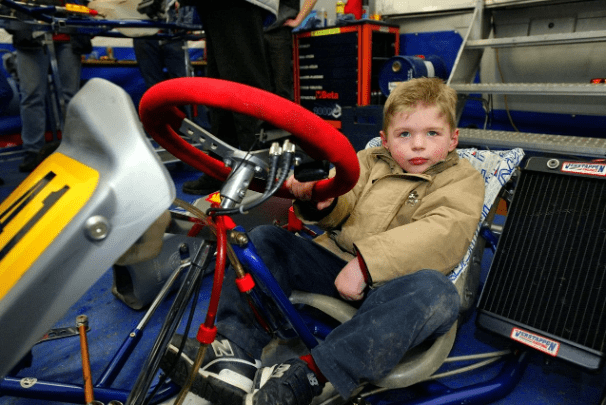
In the Philippines, private entities have recently started investing in grassroots motorsports programs. A prime example of a young rising Filipino athlete in the field of motorsports is emerging star Bianca Bustamante, a former McLaren Development Program driver and the first Filipina to join the F1 Academy, who started professionally racing against boys when she was only 6 years old. Bianca also graduated from karting to single-seater racing at only 17 years old.
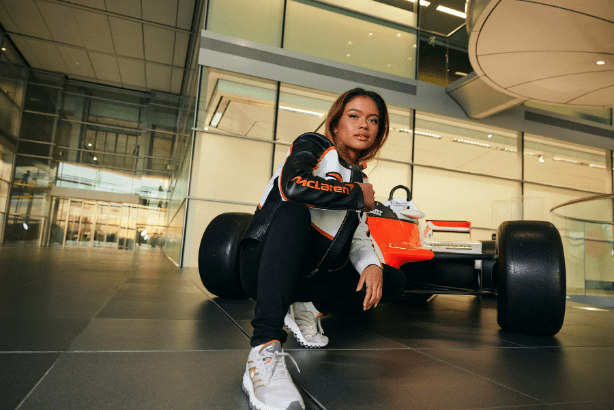
Interestingly, the minimum age to drive with an LTO-issued driver’s license in the Philippines is at least 16 years old. This idea seems so absurd when you realize that minor racers, as young as 12 years old, compete in kart racing or junior Formula races at speeds higher than the usual limits for public roads in the country.
This trend of young aspiring Filipino racers following the footsteps of global racing stars like Verstappen or homegrown talents like Bianca highlights legal issues, including major liabilities surrounding motorsports involving minors, particularly when accidents or crashes happen that result in injuries. It begs the question, how should the tort doctrine of assumption of risk be interpreted in relation to a minor’s capacity to give consent vis-à-vis the principle of parental consent?
The answer is not as simple. Firstly, a minor in the Philippines is deemed to have limited legal capacity to act. This means that an unemancipated minor cannot freely consent or validly enter into contracts without parental consent . In the event they do contract, such contracts are deemed voidable , which may either be annulled in court or ratified by their parents .
Secondly, when a minor commits a wrongful act giving rise to damages for torts or quasi-delicts, it is the parents who are generally made civilly liable for damages, pursuant to the doctrine of vicarious liability, subject to the appropriate defenses provided by law , such that if they can prove that they observed the diligence of a good father of a family to prevent the damage . Vicarious liability arises from torts or quasi-delicts wherein whoever causes damage to another, by act or omission, is obliged to pay for the damage done if there is a finding of fault or negligence. This simply means that parents of an unemancipated child may be sued and held civilly liable for damages arising from the child’s wrongful acts while under their care. This parental liability is anchored upon parental authority coupled with a presumed parental dereliction in the discharge of the duties accompanying such authority. Hence, under the law, an unemancipated minor participating in motorsports should generally not be held personally liable for damages arising from their fault or negligence while racing.
The key consideration here is the intent of the law, which recognizes that children who have not yet attained the age of majority lack the proper discernment to fully appreciate the consequences of their actions. As such, it would be unfair to hold minors, who are acting without discernment, accountable for their negligent acts or omissions. For example, if a 12-year-old Max Verstappen recklessly overtakes a 13-year-old Charles Leclerc, causing the latter to hit a wall and suffer serious injuries, it would be unreasonable to personally hold the former civilly liable to pay for the damages sustained by the latter. To begin with, a 12-year-old child is not expected to have his own property to answer for damages.
A defense that parents may possibly raise to evade civil liability is to point the liability towards the minor racer’s team management or coaches, based on the temporary special parental authority vested in them by analogy under Art. 218 of the Family Code . The parents can argue that as the party entrusted to provide guidance over the minor racer during a racing event, it is the team management or the coach who has temporary special authority when the tort or quasi-delict occurred, and thus had supervision over the minor and should be held principally and solidarily liable for damages arising out of the negligent acts of the minor racer.
On the flipside, motorsports event organizers may be held primarily and directly liable for injuries or incidents that occur during a race if it is proven that they were negligent in preventing the injury or incident. However, a possible defense for them is the “assumption of risk” doctrine, which means that one who voluntarily exposes himself to an obvious, known, and appreciated danger assumes the risk of injury that may result therefrom.
In the context of motorsports involving minors, the case of Abrogar v. Cosmos Bottling provides guidance insofar as the Supreme Court ruled that a minor running in a marathon could not have waived any claim for damages in the context of the doctrine of assumption of risk as nobody in his right mind would have joined the marathon if he had known of or appreciated the risk of harm or even death from vehicular accident while running in the organized running event. While not completely at all fours in the context of motorsports, it may be extended by analogy that no parent in their right mind would intentionally subject a child to physical harm, even if the risk involved in motorsports is considerably graver than the risk associated with a marathon. In fact, a parent should expect a higher degree of diligence from motorsports organizers, given that it is common sense that motorsports is more prone to freak accidents. As such, organizers must take every possible measure to avoid injuries or fatalities during a race. It is only reasonable for race event organizers to assume liability in the normal course of business, especially those races involving minors, in the event they are found to be negligent in preventing a known yet avoidable risk, such as crashes and collisions.
Lastly, a harmony of laws and jurisprudence reveals that a higher degree of diligence is required if a sporting event involves minors, as the law imposes a duty of care towards minors, even if ordinarily, there was no such duty under the same circumstances had the persons involved been adults of sufficient discretion. Hence, it would be reasonable for the law to require extraordinary diligence in the vigilance and observance of security and safety of minors in a motorsports event, according to all the circumstances of each case, as a motorsports event involving minors is imbued with public interest, specifically in safeguarding the general welfare and best interest of minors, for a license to race is not a license to take away an unemancipated minor racer’s rights to be protected under the law.
Born to be a 6-foot-3 Parisian model, forced to be a law student—Charles Cruz has his sights on specializing in Fashion Law. Charles is also a Tifosi who prays for his namesake, Charles Leclerc, to finally get a decent strategy
 The OG of Philippine Sports Law